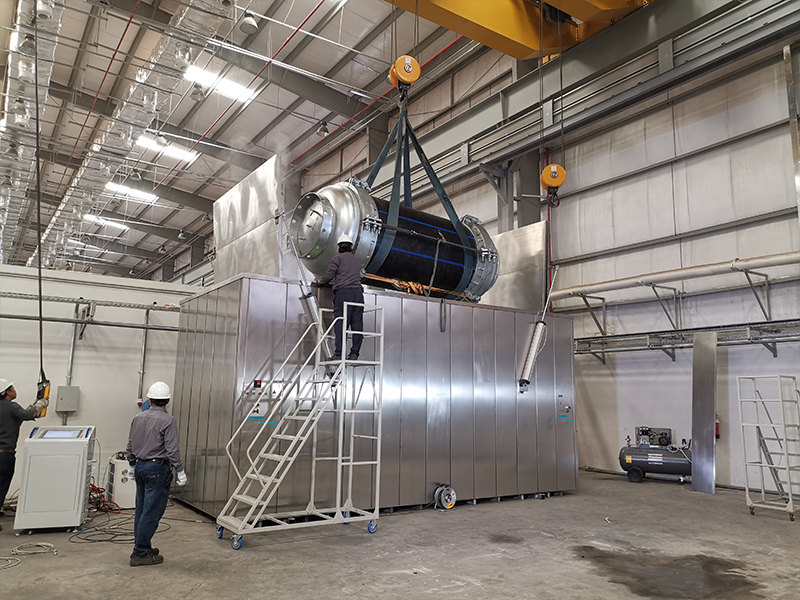
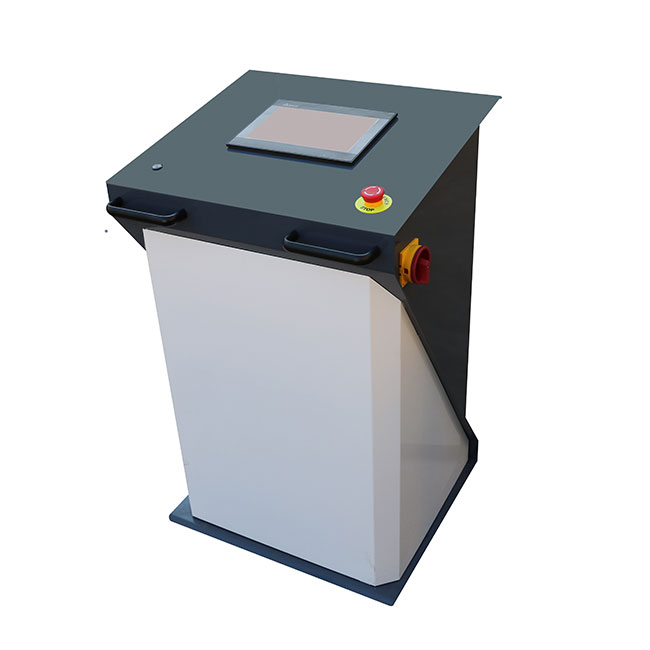
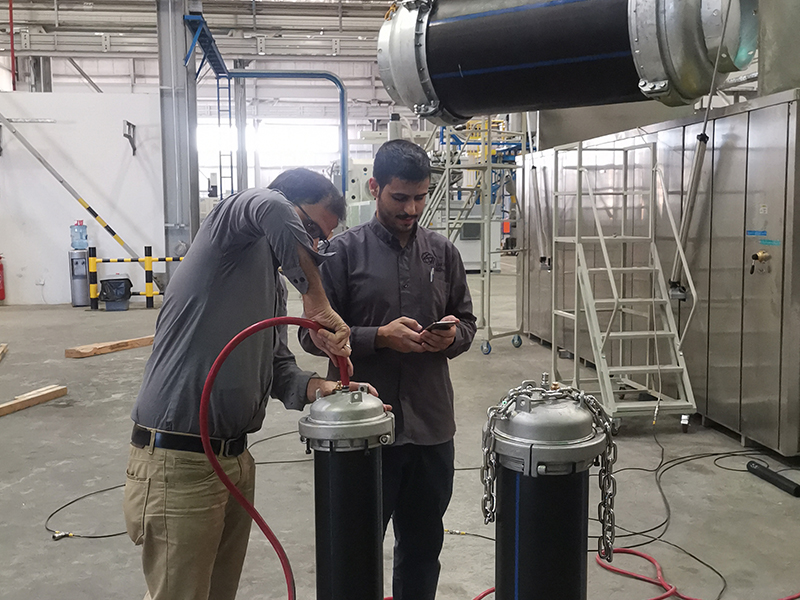
Built for plastic fitting manufacturers and commercial procurement partners, our modular-design hydrostatic testing equipment offers flexible, space-efficient pressure testing. It supports 1–20 stations within 0.5 m², features self-developed maintenance-free solenoid valves, and handles burst and internal-pressure tests with high accuracy for various fitting sizes and materials.
GT-TEST modular-design hydrostatic testing equipment (Model GT-HPT) is built for plastic fitting manufacturers and commercial procurement partners requiring multi-station pressure testing in a compact footprint. The system performs constant internal pressure tests and short-term hydraulic burst tests on thermoplastic pipes and fittings manufactured from PE, PVC, PEX, PP, and PB. A modular architecture allows up to 20 independent pressure stations to operate within an area of approximately 0.5 m², with 30 stations available on request. The equipment uses self-developed solenoid valves and a high-pressure water hydraulic pump paired with a large-capacity pressure reservoir. Pressure output is configurable up to 100 bar, 160 bar, or 200 bar, with a pressure resolution of 0.01 bar.
Key Design Features of Modular Fittings Pressure Testers
Modular Multi-Station Architecture
Each pressure station connects to a central control unit via a solenoid valve, allowing independent pressure control for each specimen. The modular layout means stations can be added or removed based on production volume without replacing the entire system. Up to 20 stations fit within approximately 0.5 m² of floor space, and configurations of 30 stations are available by custom order.
Self-Developed Solenoid Valve System
The solenoid valves are designed in-house to extend service life and reduce the frequency of routine maintenance. Each valve controls pressure to an individual station, and the system is protected by electric, mechanical, and software-level safety interlocks.
High-Pressure Hydraulic Pump and Reservoir
A high-pressure water hydraulic pump works in conjunction with a large-capacity pressure reservoir to maintain consistent pressure supply across all active stations. The reservoir buffers pressure fluctuations caused by sample expansion, particularly relevant for large-diameter PE pipes with high expansion rates.
Software and Control Features for Hydrostatic Test Systems
Real-Time Monitoring and Data Protection
The control software provides specimen pre-treatment, real-time pressure monitoring, and test data storage. A power-off protection function saves test progress, and the system resumes operation automatically once power is restored. Timing functions support both counter-up and counter-down modes over a range of 0 to 10000 hours, with a time resolution of 1 second.
Intelligent Specimen Recognition
The software distinguishes the size and material of each specimen and applies a corresponding pressure-ramping algorithm. For pipes with a high expansion rate, the system applies a rapid pressure-rise rate followed by steady constant-pressure holding.
Technical Specifications for Multi-Station Hydrostatic Testers
Parameter
Value
Model
GT-HPT
Brand
GT-TEST
Output pressure
Up to 100 bar, 160 bar, or 200 bar
Capacity
1 to 20 stations (30 stations on request)
Pressure resolution
0.01 bar
Timing range
0-10000 h
Time resolution
1 s
Timing mode
Counter-up, counter-down
Applicable standards
ISO 1167, ASTM D 1598, ASTM D 1599
Applicable Standards for Fittings Hydrostatic Testing
ISO 1167 Compliance
The GT-HPT system conducts constant internal pressure tests in accordance with ISO 1167, covering thermoplastic pipes and fittings under specified temperature and pressure conditions.
ASTM D 1598 and ASTM D 1599 Compliance
ASTM D 1598 time-to-failure tests and ASTM D 1599 short-time burst tests are both supported. The system records pressure, time, and failure events for each station independently.
Industrial Applications of Modular Hydrostatic Testing Equipment
This equipment serves plastic fitting manufacturers, pipe extrusion plants, and independent testing laboratories that need to test multiple specimens simultaneously. The compact footprint makes it suitable for facilities with limited laboratory space, while the modular scalability supports growing production volumes. Associated equipment includes test tanks, end closures, and laboratory saws for specimen preparation.
FAQ
How many pressure stations can the system support?
The standard configuration supports 1 to 20 independent stations. Custom configurations of up to 30 stations are available on request.
What is the maximum output pressure?
The system is configurable for output pressures up to 100 bar, 160 bar, or 200 bar, depending on the selected model variant.
What materials can be tested?
The equipment tests thermoplastic pipes and fittings made from PE, PVC, PEX, PP, and PB, as well as glass-fiber-reinforced pipes and tubes.
How much floor space does a 20-station system require?
A 20-station configuration fits within an area of approximately 0.5 m², not including the associated test tank and end-closure workspace.
Does the system require ongoing maintenance?
The self-developed solenoid valves are designed to reduce routine maintenance requirements. Regular inspection of hydraulic connections and calibration of pressure sensors are recommended per the operation manual.