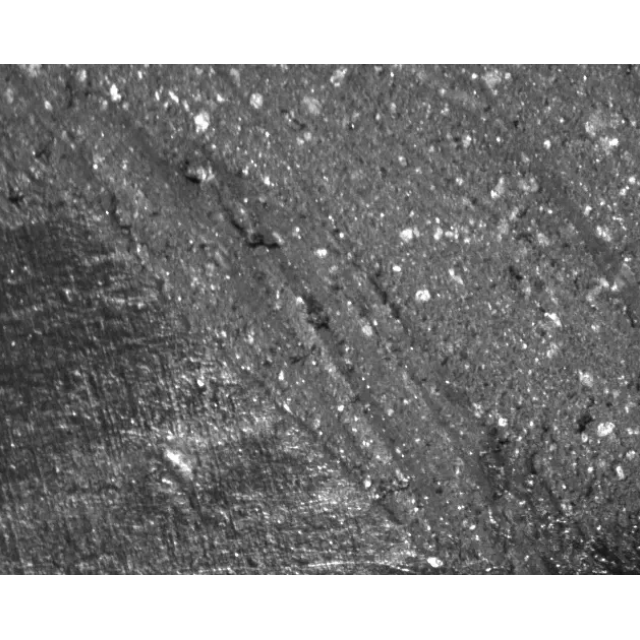
A black PE pipe may look solid, uniform, and compliant when it leaves the production line, yet still fail years earlier than expected once it is buried underground or exposed to sunlight. When this happens, the cause is rarely obvious from formulation data alone. In many real cases, the root problem lies in carbon black dispersion PE pipe performance rather than carbon black content itself. At GT-TEST, a professional laboratory testing equipment supplier serving plastic pipe manufacturers worldwide, we often see how dispersion quality quietly determines whether a pipe delivers decades of service life or becomes a long-term liability.
Why PE Pipes Use Carbon Black in the First Place
Carbon black plays a central role in the performance of polyethylene pipes, especially those intended for outdoor or buried applications where environmental exposure cannot be avoided.
UV Protection and Long-Term Durability Logic
Polyethylene is inherently sensitive to ultraviolet radiation. Prolonged UV exposure breaks polymer chains, leading to embrittlement, surface cracking, and loss of mechanical strength. Carbon black acts as an efficient UV absorber, converting harmful radiation into harmless heat and preventing it from penetrating the polymer matrix.
This protection is not a short-term benefit. For water, gas, and industrial pipelines, service life expectations often exceed 50 years. Carbon black is therefore not just an additive but a structural safeguard designed to protect long-term durability under continuous environmental stress.
Why a Black Appearance Is Not Proof of Protection
A uniform black color does not guarantee effective UV protection. Visual appearance reflects surface color, not microscopic distribution. Carbon black may be unevenly dispersed, leaving micro-regions with insufficient protection. These regions become vulnerable to UV attack, even though the pipe looks acceptable during visual inspection. This disconnect between appearance and performance is one of the main reasons dispersion testing is essential for PE pipes.
What Poor Dispersion Looks Like Inside the Polymer
Understanding how poor dispersion manifests inside a PE pipe helps explain why it has such a strong impact on performance.
Agglomerates vs. Carbon-Black-Poor Windows
Poor dispersion typically appears in two forms. Agglomerates are clusters of carbon black particles that were not fully broken down during mixing. These clusters create localized stiffness and act as stress concentrators. Windows are regions where carbon black concentration is too low, reducing UV protection and leaving the polymer exposed.
Both defects are microscopic and invisible without proper testing, yet both significantly influence how a pipe behaves under load and environmental exposure.
Where Defects Tend to Concentrate
Dispersion defects are not always randomly distributed. They often concentrate near the pipe surface, in weld zones formed during butt fusion, or at stress points created during installation and service. These locations are already mechanically vulnerable, so poor dispersion amplifies existing risks. Over time, these regions become the starting points for cracks and other forms of degradation.
Performance Pathways Affected by Dispersion
Dispersion quality influences multiple performance pathways that together define PE pipe reliability.
Crack Initiation and Slow Crack Growth Risk
Slow crack growth is one of the most critical failure mechanisms in PE pipes. Poor dispersion accelerates this process by creating local stress concentrations around agglomerates or poorly protected regions. Under sustained internal pressure and environmental stress, cracks initiate at these weak points and propagate slowly through the pipe wall.
Even when overall material properties appear acceptable, dispersion-related defects shorten the time required for cracks to reach a critical size. This is why dispersion quality has a direct link to long-term pressure resistance.
Butt Fusion Joint Integrity and Local Weak Regions
Butt fusion joints are among the most sensitive areas in a PE piping system. Fusion involves heating and re-solidifying material, which can redistribute carbon black locally. If the base material already has poor dispersion, fusion can further concentrate defects in the joint zone.
Non-uniform dispersion near joints reduces joint strength and increases the likelihood of premature failure. In pipeline systems, joint failures are particularly costly because they are difficult to locate and repair once installed.
What the Standards Push You to Control
Industry standards recognize that PE pipe performance depends on more than formulation alone.
ISO 4427 Requirements for Black Compounds
ISO 4427 specifies requirements for polyethylene piping systems used for water supply. These requirements include limits on carbon black content and expectations for dispersion quality. By defining both parameters, the standard acknowledges that quantity and distribution address different risks.
Carbon black content ensures that enough UV absorber is present. Dispersion grade ensures that this absorber is effective throughout the pipe wall. Meeting one requirement without the other does not provide full assurance of performance.
Why a Dispersion Grade Is Used for Acceptance Decisions
Dispersion grades provide a practical way to evaluate and communicate dispersion quality. Instead of relying on subjective descriptions, grades offer a standardized reference for accept or reject decisions. This consistency is critical when materials are supplied across regions, audited by different organizations, or compared over long production periods.
Testing Workflow That Mirrors Real PE Pipe Risks
Effective testing strategies reflect how and where risks arise in real products.
Sampling Locations That Matter
Dispersion testing can be performed on compound pellets or on finished pipe sections. Pellet testing helps evaluate raw material quality and supplier consistency. Testing on extruded pipe walls captures the combined effects of formulation and processing.
For applications with high reliability requirements, testing both pellets and finished pipes provides a more complete picture of dispersion-related risks.
Pairing Dispersion Checks with Content Checks
During supplier qualification and process validation, dispersion testing should be paired with content testing. Content testing confirms formulation accuracy, while dispersion testing verifies processing effectiveness. Together, these tests reduce the chance that hidden weaknesses enter production.
Turning Test Data into Process Action
Dispersion testing delivers the greatest value when results are used to guide process improvement rather than simply document compliance.
What a Rising Agglomerate Count Usually Indicates
An increase in agglomerate count often points to insufficient mixing shear, reduced residence time, or changes in raw material properties. Identifying this trend early allows manufacturers to adjust processing parameters before defects translate into field failures.
Dispersion data thus becomes a diagnostic tool, linking material structure to specific process variables.
Practical Go or No-Go Thresholds Aligned to Specifications
While standards define minimum requirements, manufacturers often establish internal thresholds to manage risk more conservatively. Dispersion grades and particle distribution data can be used to define clear go or no-go criteria for production batches, supporting faster and more confident release decisions without overpromising performance.
PE Pipe Risk Map and What Dispersion Testing Reveals
Pipe Performance Concern | Dispersion Issue That Contributes | What to Look for in Results |
UV aging resistance | Carbon-black-poor regions | Windows and uneven distribution |
Slow crack growth | Local stress concentrators | Large agglomerates and high dispersion grade |
Fusion joint reliability | Weak zones near joint | Non-uniformity in critical areas |
Why Dispersion Control Supports Lifecycle Reliability
PE pipes are long-term infrastructure assets. Failures often occur decades after installation, when accountability is difficult to assign and repair costs are high. Dispersion control during production is one of the few opportunities to influence these outcomes proactively.
By integrating dispersion testing into quality control workflows, manufacturers can document that pipes were produced with uniform protective structure. This documentation becomes valuable evidence during audits, customer reviews, and dispute resolution, reinforcing trust across the supply chain.
GT-TEST supports this approach by supplying image-based dispersion testing systems and specimen preparation solutions designed specifically for plastic pipe laboratories. These tools help transform dispersion testing from an occasional check into a reliable part of routine quality control.
Conclusion
Dispersion is not a laboratory detail; it is a durability variable that directly shapes how PE pipes perform over decades of service. While carbon black content confirms formulation, dispersion determines whether that formulation truly protects against UV exposure, crack growth, and joint failure. Understanding carbon black distribution in PE piping is therefore essential for manufacturers who want to reduce long-term risk and meet demanding standards. As a professional supplier of plastic pipe testing equipment, GT-TEST provides integrated solutions that combine consistent specimen preparation with image-analysis-based dispersion testing. If you want to strengthen your quality control strategy and better defend product performance in audits and disputes, contact us to learn how our testing solutions can support your laboratory.
FAQ
Why does carbon black dispersion matter more than appearance in PE pipes?
Appearance only reflects surface color. Dispersion determines whether carbon black is uniformly distributed inside the pipe, which directly affects UV resistance and long-term durability.
How does poor dispersion influence slow crack growth?
Poor dispersion creates stress concentrators that accelerate crack initiation and propagation under sustained pressure and environmental stress.
Is dispersion testing required by PE pipe standards?
Many standards, including ISO 4427, specify both carbon black content and dispersion grade to control different performance risks.
Where should samples be taken for dispersion testing?
Samples can be taken from compound pellets to assess raw material quality and from extruded pipe walls to evaluate the combined effect of formulation and processing.


