Carbon black testing terms can often be confusing, especially for those who are not familiar with the technical jargon used in the industry. Terms like dispersion grade, agglomerate, window, microtome, and others are commonly used in carbon black dispersion testing. However, without a clear understanding of these terms, it can be difficult to interpret test results and make informed decisions about product quality and performance. To help bridge this knowledge gap, GT-TEST has compiled a customer-friendly glossary of essential terms to lower the barrier for understanding and make it easier for you to navigate carbon black testing processes and their results.
Dispersion Fundamentals
Dispersion vs. Distribution vs. Mixing: What Each Means
Understanding the difference between dispersion, distribution, and mixing is key to interpreting results accurately. While these terms are often used interchangeably, they refer to different stages of the carbon black integration process:
Dispersion refers to the process of breaking up and distributing carbon black particles evenly throughout the polymer matrix. It directly affects the material's physical properties, such as strength, UV resistance, and durability.
Distribution describes how evenly the carbon black is spread throughout the material. A well-distributed polymer will have uniform properties throughout the sample.
Mixing refers to the act of blending the carbon black with the polymer matrix. While mixing initiates dispersion, it does not guarantee uniformity in particle distribution.
Effective dispersion is critical to achieving uniform properties across the polymer matrix, while poor dispersion can lead to weak points, inconsistencies, and premature material failure.
Agglomerate, Aggregate, Particle: Why Confusion Happens
Understanding agglomerates, aggregates, and particles is essential when interpreting dispersion test results. These terms are often used in overlapping ways, but each refers to a specific form of carbon black distribution:
Agglomerate refers to a clump of carbon black particles that have not been fully broken down during the dispersion process. These clumps are larger than the primary particles and can cause defects in the material’s performance.
Aggregate refers to a group of particles that are chemically bonded or fused together. Aggregates are smaller than agglomerates but can still affect the properties of the final material.
Particle refers to the smallest individual unit of carbon black. It is the ideal form in which carbon black should be distributed within the polymer matrix for optimal performance.
Understanding these distinctions helps clarify the cause of defects observed in dispersion testing and allows manufacturers to make necessary adjustments during the production process.
Result & Reporting Terms You’ll See on Test Reports
Dispersion Grade: What It Summarizes
The dispersion grade is a standardized rating that summarizes the uniformity of carbon black dispersion in the material. It provides a quick way to assess whether the dispersion meets the required standard, but it does not explain the underlying reasons behind the dispersion quality. Dispersion grades often range from "Excellent" to "Poor," based on the extent to which carbon black has been evenly distributed throughout the material. However, the dispersion grade alone does not give a complete picture, which is why it should always be considered alongside other results such as particle size distribution and microscopic images.
Size Distribution, Histogram, Cumulative %
These terms are typically seen in dispersion test reports, particularly when analyzing particle size distribution. A size distribution refers to the range of particle sizes present in the sample. This distribution is usually presented in the form of a histogram, which provides a visual representation of the sizes of the particles in the sample. A cumulative percentage shows the percentage of the total number of particles that fall within a specific size range. These metrics are critical for evaluating how effectively the carbon black has been dispersed.
Field of View, Magnification, Calibration
Field of view (FoV) refers to the area visible under the microscope during the test. The FoV should be large enough to represent a meaningful portion of the sample but small enough to capture significant details.
Magnification refers to the enlargement of the sample to reveal finer details of the dispersion. Different magnifications are used depending on the size of the carbon black particles and the level of detail required.
Calibration is the process of setting the microscope and measurement equipment to known standards. Proper calibration ensures the accuracy of the results and helps maintain consistency across different tests.
Sample Preparation Terms
Microtome Slicing: Why 1–30 μm Range Matters
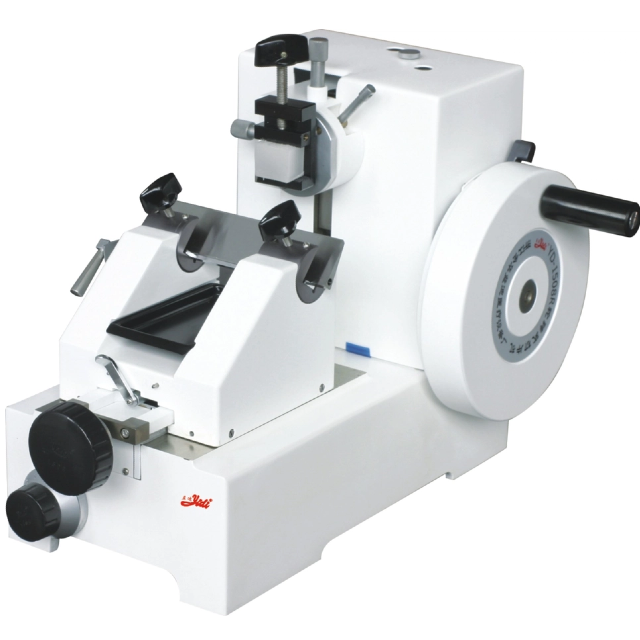
A microtome is an instrument used to slice samples into thin, uniform sections for testing. The thickness of the slice is crucial for ensuring consistent imaging results. Typically, slices in the range of 1–30 microns are ideal for carbon black dispersion testing. Slicing the sample too thick or too thin can lead to inaccurate results, as the carbon black particles may not be uniformly represented.
The microtome ensures that every sample is prepared consistently, which helps improve repeatability and reliability in the testing process. Proper specimen preparation is essential for obtaining accurate dispersion data and making informed decisions about material quality.
Melt-Press Slide Method: Why Temperature/Pressure Control Matters
The melt-press slide method is another technique for preparing samples for dispersion testing. In this method, the polymer material is heated and pressed to form thin slides for testing. The control of temperature and pressure during this process is critical for achieving consistent results. If the temperature or pressure fluctuates, the carbon black may not disperse properly, leading to inaccurate dispersion test results. This method is often used when a microtome is not available or when larger specimens are needed for analysis.
Content Testing Terms
Carbon Black Content (% by Mass) and Common Methods
Carbon black content refers to the percentage of carbon black in a polymer material by mass. It is a key parameter in ensuring that the material meets the minimum carbon black requirements for UV protection and other performance properties. The most common methods for measuring carbon black content include ASTM D1603 and ISO 6964, both of which rely on pyrolysis and gravimetric determination to measure the weight loss of the material after heating.
Pyrolysis, Gravimetric Determination: Simple Explanation
Pyrolysis is the process of heating the material to high temperatures to break it down, allowing the carbon black content to be measured by the weight loss during this heating process.
Gravimetric determination refers to measuring the mass of the sample before and after pyrolysis to calculate the percentage of carbon black.
These methods are widely used to determine whether the material meets regulatory requirements for carbon black content.
Standards & Compliance Terms
ISO 4427: Why PE Pipe Buyers Cite It
ISO 4427 is the international standard for PE piping systems, particularly for water supply systems. It outlines the requirements for carbon black content and dispersion in PE pipes, ensuring that the pipes are durable and resistant to UV degradation. This standard is frequently cited by PE pipe manufacturers and buyers because it sets clear requirements for the material’s quality and performance, making it a critical reference for compliance and quality assurance.
ISO 18553: What It Standardizes
ISO 18553 is the standard that specifically addresses the dispersion assessment and grading of carbon black in polyolefin pipes and compounds. This standard provides guidelines for evaluating the quality of dispersion and ensuring that carbon black is properly distributed in the polymer matrix. Following ISO 18553 helps manufacturers meet industry expectations for uniform dispersion and reliable performance.
ASTM D5596: Where It Appears
ASTM D5596 is the standard for microscopic evaluation of carbon black dispersion. It is often used in industries such as geosynthetics, where the material’s dispersion quality is critical. The method outlined in ASTM D5596 ensures that carbon black is evenly dispersed in the polymer matrix, providing consistency in material performance.
“Failure Mode” Words Customers Mention
Window
A window refers to a region in the polymer where the carbon black dispersion is lacking or uneven. These poor regions can result in weak points in the material, leading to premature degradation or failure under stress. Identifying windows is critical for ensuring the material meets performance standards.
Streaking, Specks, Poor Weld Zone, Early Cracking
Streaking and specks are signs of uneven distribution of carbon black in the polymer. These defects can lead to weaknesses that may cause the material to fail under stress or environmental conditions.
Poor weld zones occur when carbon black is not uniformly distributed at the welding point, which can lead to joint failure.
Early cracking is often caused by weak zones in the polymer, where the carbon black is poorly dispersed.
Tests like dispersion microscopy and image analysis can help identify these failure modes, allowing manufacturers to address potential issues before the material is used in production.
Table: Term → Plain Meaning → Related Test
Term | Plain Meaning | Related Test |
Dispersion Grade | A standardized rating of uniformity | ISO 18553-style dispersion test |
Agglomerate | A clump that didn’t break up | Dispersion microscopy/image analysis |
Carbon Black Content | Total % carbon black in material | ASTM D1603 / ISO 6964-type methods |
Microtome | Tool for thin, consistent slices | Specimen prep for dispersion testing |
Conclusion
When teams share the same definitions and understanding of carbon black testing terms, they stop arguing about results and start improving processes. Clear communication and standardized testing procedures are the foundation of reliable dispersion data, and aligning your team with the correct terminology helps ensure that you are on the same page throughout the testing process. At GT-TEST, we specialize in carbon black dispersion testing, offering solutions that combine microtome specimen preparation with automated image-analysis reports. Contact us to learn more about how we can help you streamline your testing workflows and ensure consistent, high-quality results.
FAQ
What is the dispersion grade in carbon black testing?
The dispersion grade is a standardized rating that measures the uniformity of carbon black dispersion within the polymer material.
Why is microtome slicing important for dispersion testing?
Microtome slicing ensures uniform and consistent slices of the polymer sample, providing accurate and repeatable results for dispersion analysis.
What is the difference between agglomerates and aggregates?
Agglomerates are clumps of carbon black particles that haven’t been fully dispersed, while aggregates are groups of particles that are chemically bonded or fused together.
How do I ensure my dispersion tests are standardized?
By using consistent specimen preparation methods, such as microtome slicing, and adhering to recognized standards like ISO 18553 or ASTM D5596, you can ensure standardized and reliable test results.


