Carbon black content and dispersion tests are integral to quality control for polymer products like PE pipes and rubber compounds. However, for many manufacturers, the question arises: do you need to perform both tests, or can one suffice? With limited time and budget, it’s essential to understand when both tests are necessary, and when you can get by with just one. This article offers a decision-making framework, guiding customers to choose the appropriate testing strategy based on application needs and potential risks.
The Short Answer
The decision of whether you need both tests doesn’t have a one-size-fits-all answer. It depends on your specific requirements and what you’re willing to risk.
Content Is Baseline Compliance; Dispersion Is Performance Insurance
Carbon black content testing is primarily a compliance check. It verifies that the specified amount of carbon black is present in the material, ensuring the product meets the minimum standards for UV resistance. However, carbon black content alone doesn’t guarantee that the material will perform as expected. The dispersion of carbon black within the polymer matrix is equally important, as it determines the material’s ability to maintain consistent performance under long-term stress, such as UV exposure or mechanical load. Dispersion testing provides performance insurance, ensuring the carbon black is effectively and uniformly distributed.
Why One Cannot Replace the Other
Carbon black content and dispersion test results complement each other. Content testing checks for the presence of the right amount of carbon black, but it doesn’t address how well it is distributed. Even if the content is within specification, poor dispersion can still lead to uneven UV protection, localized weaknesses, or premature failure of the material. Therefore, one test cannot replace the other when it comes to ensuring both compliance and long-term performance.
Situations Where Content-Only Is Not Enough
There are specific situations where relying solely on carbon black content testing is not sufficient, and dispersion testing becomes essential.
Field Failures, Warranty Claims, Joint Issues
If your PE pipes or rubber products experience field failures, warranty claims, or issues with joint integrity, carbon black dispersion testing becomes critical. For instance, poor dispersion can lead to weak points in the material, which may fail under stress. This is especially important for customers who rely on your products in demanding applications where performance consistency is critical. Content testing alone would not identify these weak points.
New Supplier Qualification and High-Risk Applications
When introducing new suppliers or using a new batch of carbon black, it’s important to verify both content and dispersion. Even if the carbon black content is on target, poor dispersion may still occur if the supplier uses inconsistent processes. This is especially critical in high-risk applications, such as water or gas transportation systems, where the cost of failure can be high. Carbon black dispersion testing in these scenarios ensures that your materials perform reliably, not just meet the minimum content requirement.
Situations Where Dispersion-Only Is Risky
While dispersion testing provides valuable insight, it’s not foolproof on its own. There are situations where relying solely on dispersion results can lead to issues.
You Might Pass Dispersion While Drifting Out of % Spec
One potential risk of only testing for dispersion is that you might achieve a passing grade for dispersion while the material’s carbon black content drifts out of the required percentage. Dispersion testing focuses on the uniformity of distribution but does not provide direct feedback on the quantity of carbon black. This creates the possibility that the material may appear “well-dispersed” but still fall short of performance standards due to insufficient content.
Standards Often Call Out Both Targets for PE Compounds
Many industry standards, especially in the case of PE pipe compounds, require both carbon black content and dispersion quality to be within specified ranges. For example, ISO 4427 (PE pipes) requires both content and dispersion grade to ensure that the material has both the correct amount of carbon black for UV protection and uniform dispersion for long-term durability. Relying solely on dispersion testing would leave you vulnerable to failing content-based requirements, which are just as important.
A Practical Frequency Plan
To ensure your testing is effective and cost-efficient, it’s important to establish a testing frequency plan that suits your production needs and application risks.
Incoming Batches: Screen and Periodic Confirmation
For incoming batches, it’s best to use a combination of screening and periodic confirmation. Content testing can be used as a quick screen to ensure that the correct amount of carbon black is present, while dispersion testing can be performed periodically to ensure uniformity. This balance helps you detect potential issues early without overburdening your testing process.
Process Changes: After Maintenance, Formulation Change, or New Carbon Black Lot
Whenever there are significant process changes—such as maintenance, a formulation change, or a new batch of carbon black—it’s important to conduct both content and dispersion tests. These changes can impact both the quantity and distribution of carbon black in the polymer. Regular testing after process changes ensures that you maintain consistency in both content and performance quality.
How to Keep the Workflow Efficient
Running both tests can seem like a time-consuming process, but there are ways to optimize your workflow and make it more efficient.
Standardize Specimen Prep to Reduce Retests
Standardizing your specimen preparation process is one of the best ways to reduce retesting and improve efficiency. Whether you’re preparing samples for content testing, dispersion testing, or both, consistent preparation ensures reliable results every time. Using tools like microtomes for specimen preparation helps ensure that slices are uniform and meet the necessary specifications for testing.
Use Automated Reporting to Reduce Admin Burden
Automating your reporting process can significantly reduce administrative burdens and human error. Automated systems that integrate both content and dispersion test results can streamline the process and provide consistent, accurate reports in real time. This allows your team to focus on making data-driven decisions rather than managing paperwork.
What to Report to Customers
When reporting your test results to customers, it’s crucial to present both content and dispersion information in a clear and understandable manner.
Provide Both % and Dispersion Grade When Selling Into Regulated Supply Chains
For customers in regulated supply chains, especially those in infrastructure or high-risk industries, it’s important to provide both the carbon black content and dispersion grade results. This shows that you are not only meeting the minimum standards but also ensuring the long-term performance of your product. Offering this level of transparency builds trust and helps you stand out from competitors who may not provide such detailed reporting.
Include Images as Evidence, Not Just Numbers
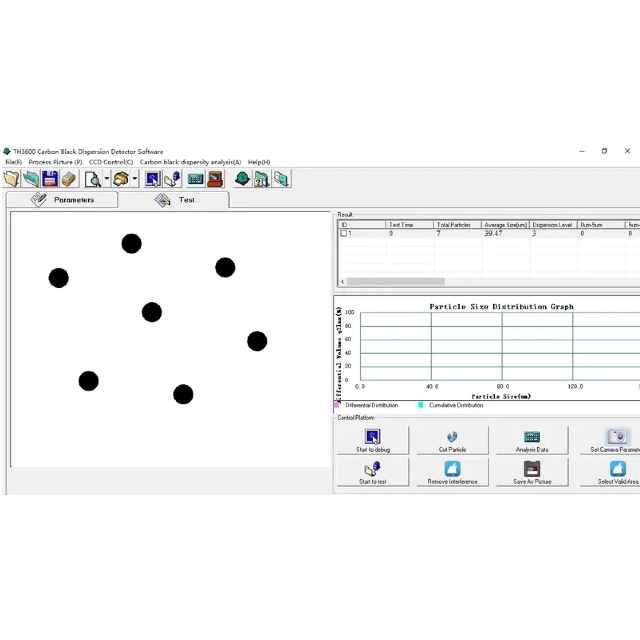
Including images of the dispersion test results along with numerical data provides visual evidence of the test and helps customers better understand the quality of the product. Images show the actual distribution of carbon black particles, making the report more tangible and understandable, especially for non-technical stakeholders.
“Both Tests?” Decision Guide
Scenario | Content Test | Dispersion Test | Why |
Routine Stable Production | Regular | Periodic | Cost-effective coverage |
New Material Supplier | Yes | Yes | Qualify both % and uniformity |
Customer Complaint | Yes | Yes | Evidence + root cause |
Process/Formulation Change | Yes | Yes | Prevent drift and agglomeration |
Conclusion
When it comes to carbon black content and dispersion tests, the real question is not whether you need both, but which risks you are willing to accept if you choose only one. Content tests confirm baseline compliance, while dispersion tests protect against long-term performance issues. By understanding when each is necessary and how they complement each other, you can build a comprehensive quality control strategy that mitigates risks and builds trust with your customers. At GT-TEST, we help manufacturers streamline their QC workflows with integrated solutions that combine content and dispersion testing, including microtome specimen preparation and automated reporting. Contact us today to learn how we can support your testing and compliance needs.
FAQ
Why is it important to run both content and dispersion tests?
Both tests ensure your materials meet both regulatory content requirements and long-term performance needs, reducing the risk of failure.
How do I know when to run both tests?
When launching new suppliers, process changes, or dealing with customer complaints, both tests are essential to guarantee quality.
Can I skip dispersion testing if content is within spec?
While content testing confirms the right amount of carbon black, poor dispersion can still cause performance issues, so both tests are often necessary.
How do I ensure my tests meet regulatory standards?
Ensure that your testing methods align with the relevant industry standards, such as ISO 4427 for PE pipes or ISO 18553 for polyolefins, and document results accordingly.


